

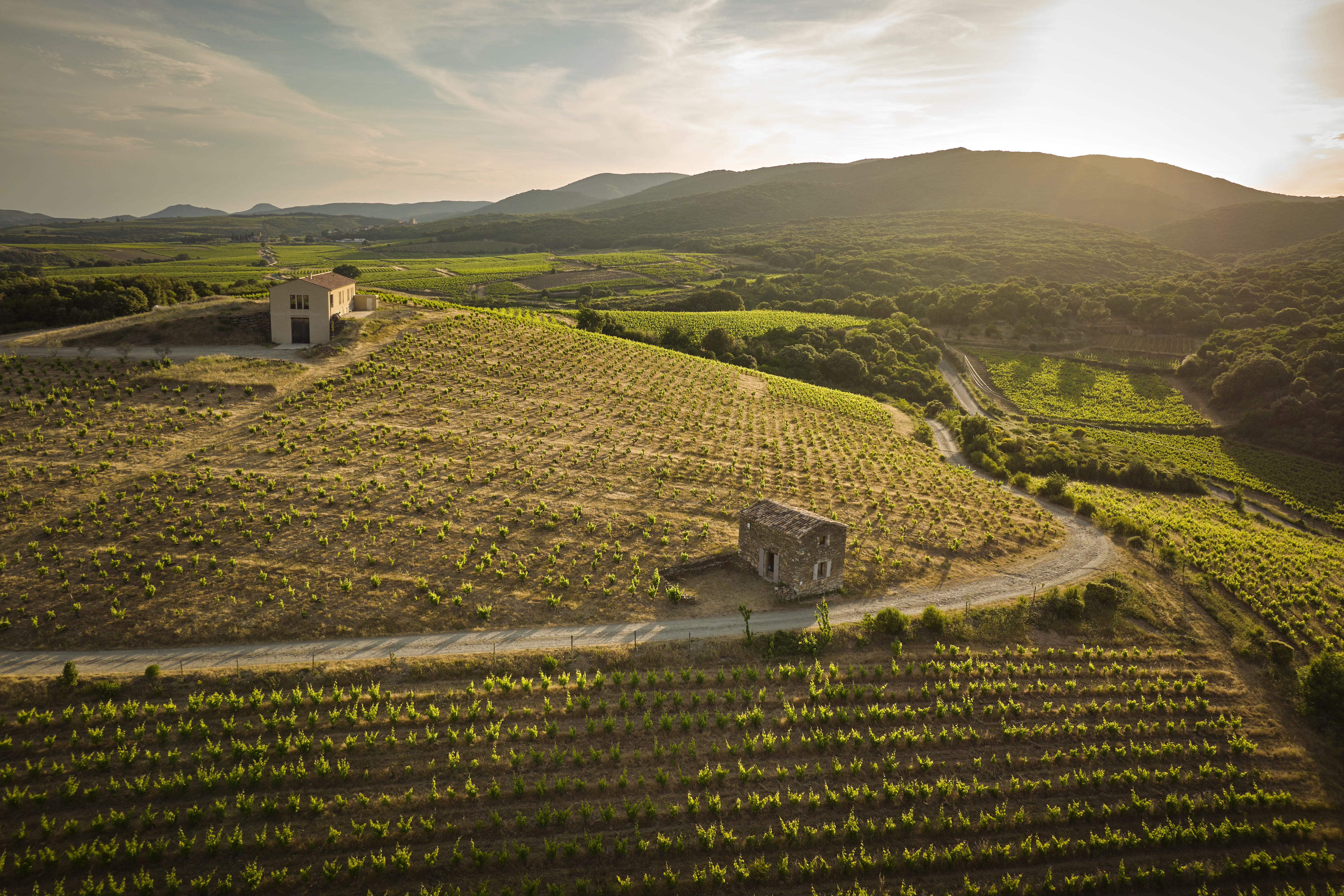
Fährt man mit dem Auto die immer karger werdende Landstrasse D909 von Béziers Richtung Norden, fällt einem nicht nur auf, dass man praktisch alleine auf der Strasse unterwegs ist und die Ausfahrten zu den letzten Dörfern der Ebene sich rar machen, sondern auch, dass sich langsam ein zarter Wind bemerkbar macht, der über die dahinrollenden Hügel streicht. Hinter Béziers wird die Landschaft weiter, rauer, stiller. Der Wind wird stärker und beansprucht, je weiter man sich nordwärts in die beginnenden Berge hineinschiebt – Richtung Parc Naturel Régional du Haut-Languedoc – die ganze Aufmerksamkeit des Besuchers dieses Landstrichs. Wir erreichen das Faugères, die sicher markanteste AOC des Languedoc. Karger Aussenposten am Fusse der Cevennen, Augenjuwel und Vorreiter einer Finesse in seinen Weinen, die es, endlich, nach langem Dornrösschenschlaf und Insidertipps, immer mehr internationales Publikum anziehen lässt. Doch der Wind peitscht einen hier oben Tag und Nacht um die Ohren, sodass ich mich frage, wie um alles in der Welt hier überhaupt etwas wächst.
Ich habe mich nicht zufällig in diese entlegene Gegend begeben. Ich besuche Brigitte Chevalier, Winzerin und Eigentümerin der Domaine Cébène.
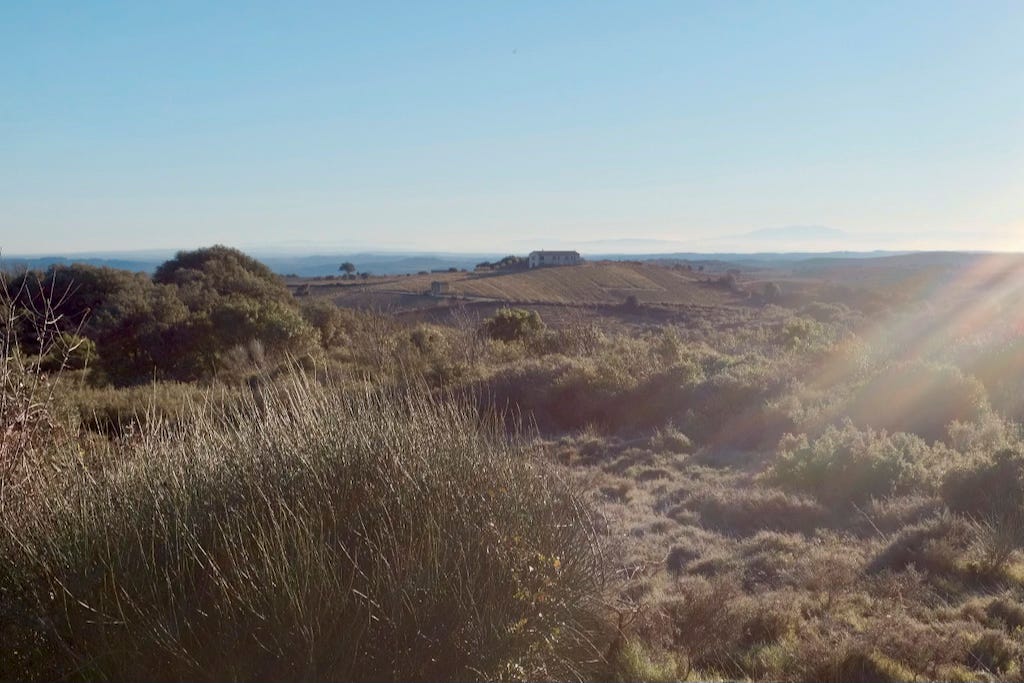
Cébène liegt fast am nördlichsten Ende der Appellation, ziemlich abgelegen, doch wunderschön, auf 300 Metern über dem Meer, auf Schiefer, unter dem wachsamen Rücken des Caroux-Massivs. Wer dorthin fährt, weiss, was er dort will. Ihr Weingut, Wohnhaus und Keller in einem, thront auf einem einzelnen, den Gezeiten ausgelieferten Hügel und trotzt selbstbewusst den Widrigkeiten der Natur hier oben.
„Alors, hier ist Montpellier, hier ist Béziers – hier ist das Département Hérault, und wir müssten irgendwo hier sein. Hier auf der Karte, direkt neben der Bäckerei. Und auf der anderen Seite des Flusses hast du diese hohen Berge.” Der höchste Berg hier trägt eine Legende in sich. Man erzählt sich, er sei der Körper einer schlafenden Göttin. Cebena. Als sie starb, habe sie dem Berg ihre Form hinterlassen.
Das Geheimnis liegt im Boden
„Wenn ich Cébène präsentiere, spreche ich zuerst über drei, vier Kriterien: Schiefer, nach Norden ausgerichtete Reben und die vorherrschenden Nordwinde vom Parc Naturel Régional du Haut-Languedoc herab. Die meisten meiner Weinberge sind nach Norden ausgerichtet. Grenache nach Norden, Carignan nach Norden, fast alles nach Norden. Mourvèdre nach Süden.”
Faugères steht für Grenache, Syrah, Mourvèdre und Carignan. Auf Schiefer werden die Weine eleganter, mit sanften Tanninen. Im Vergleich zu Ton und Kalk bringen sie mehr Sanftheit, Leichtigkeit, sind subtiler. Brigitte fährt fort: „Für mich ist Schiefer die perfekte Grundlage, um meine Weine so zu machen, wie ich sie mag. Die Pflanzen müssen tief graben, um an Wasser zu gelangen. Der Regen wird tief gespeichert für die Trockenperiode. Die Reben bekommen keinen Stress im Sommer. Das bringt eine gute Balance in der Nährstoffversorgung. Es ist ein Zeichen für gutes Terroir.”
Klar, die Natur spielt mit: Die nie aufhörenden Winde, die über das Hochplateau herunterfegen, trocknen die Pflanzen nach Regen fast sofort. Schädlinge haben es schwerer, sich niederzulassen, und die von den Bergen kommenden unterirdischen Flüsse versorgen das im Sommer so karge Land stets mit Wasser und Nährstoffen.
Als Brigitte sich für diesen Ort entschied, gab es an die 30 Produzenten in Faugères, heute sind es über 50. Es ist eine sehr dynamische Appellation. Sie arbeitete von Anfang an biologisch und stieg schnell auf Biodynamie um. 2023 folgte konsequenterweise das Demeter-Zertifikat.
Eine Herzensangelegenheit
„Ich habe diese Reben peu à peu gekauft und alles selbst gemacht: Design, Label – alles. Ich fand es interessant, einen Link zu schaffen zwischen meinen Weinen und der Geschichte, der Gegend und ihrer Weiblichkeit.” Manchmal graben Zugezogene tiefer in der Historie und wollen sich intensiver mit einem Ort beschäftigen, den sie sich freiwillig als Bleibe ausgesucht haben. „Die Linien auf den Etiketten repräsentieren etwas von dieser Geschichte – oder auch Luftströme, wie die Winde hier oben.”
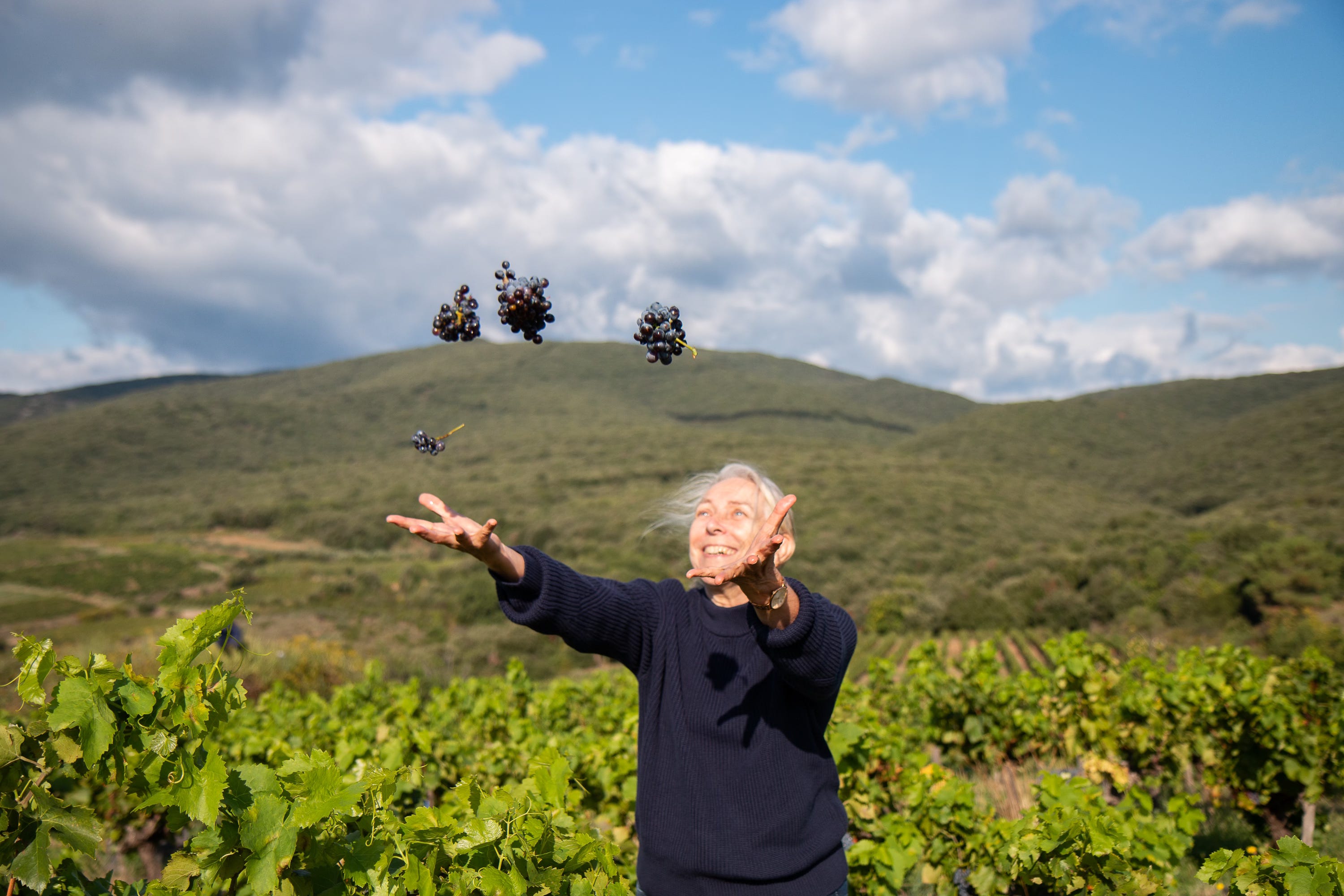
Brigitte Chevalier stammt aus Bordeaux, hat Fremdsprachen studiert und einige Jahre für die französische Botschaft in Deutschland gearbeitet. Später lebte sie drei Jahre in Simbabwe. „Danach wollte ich nach Hause. Ich wollte meinen Wurzeln folgen, meinen Platz finden.” Die Suche nach dem perfekten Ort für ihr Projekt hat jedoch eine Weile gedauert. „Bis ich den neuen Keller hatte, habe ich im Nachbardorf vinifiziert. 2011 habe ich diesen Hügel hier gekauft, 2014 durfte ich Haus und Keller bauen, 2018 war dann endlich alles fertig.”
Fünf Stimmen, ein Original
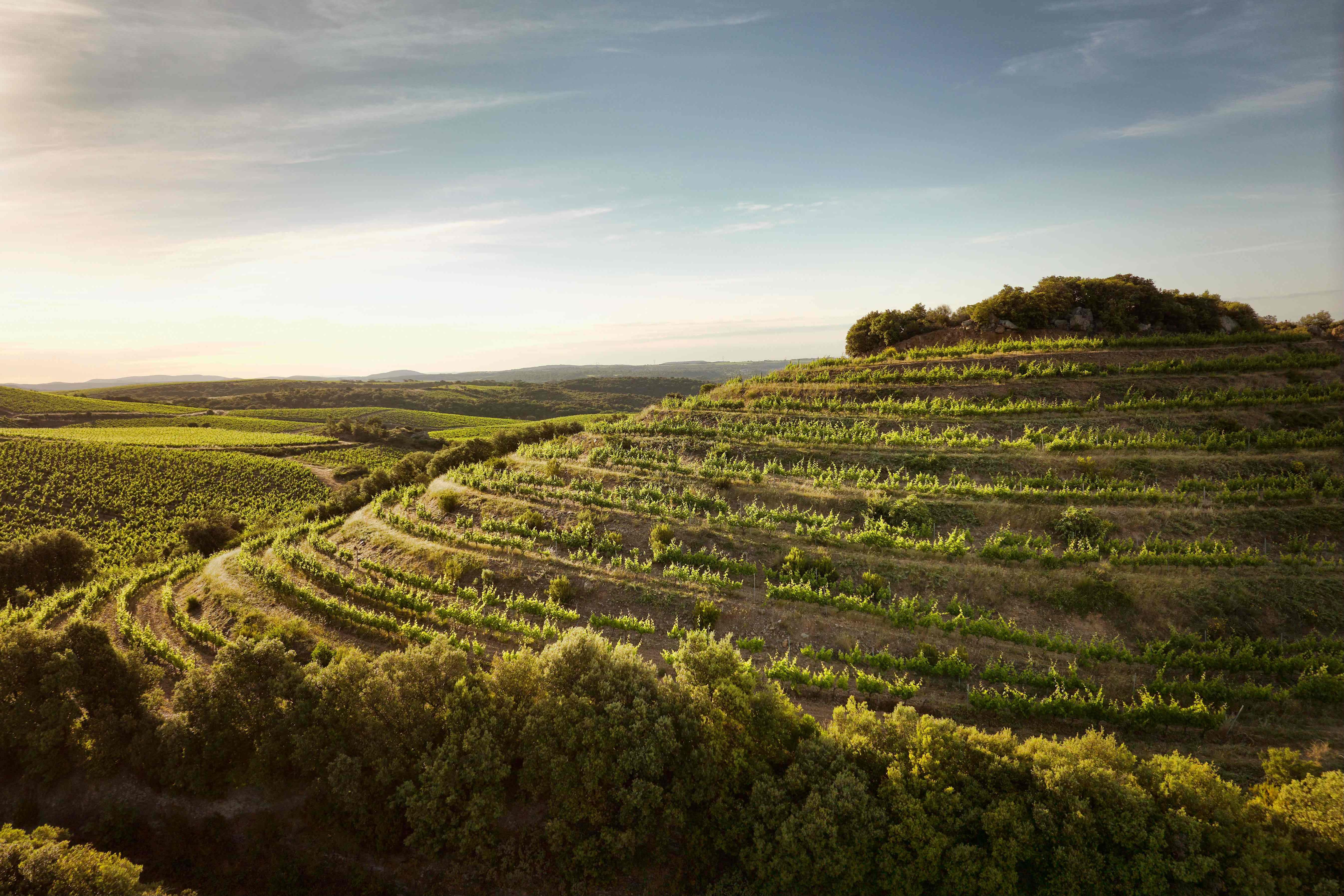
Brigitte vinifiziert alle ihre Parzellen separat und analysiert die Qualitäten bereits im Weingarten. Für Les Bancels, ihren Benchmark-Wein, arbeitet sie zum Beispiel mit etwa acht verschiedenen Syrah-Komponenten. Les Bancels ist in der Tat eine Benchmark: eine terrassierte Einzellage, perfekt nach Norden ausgerichtet und wunderschön. Wenn sie ihn trinkt, weiss sie, sagt sie, dass sie zu Hause ist. „Mit beiden Füssen auf dem Boden.” Les Bancels ist für mich vielleicht der typischste Wein, der seine Herkunft klar zum Ausdruck bringt. Er ist mein „Best Bet”, wenn ich, wie Brigitte, nach Hause kommen möchte. Wissen will, was ich bekomme. Dieser Wein geht bei mir unter der Woche, alleine – aber auch als festlicher Einsatz oder Mitbringsel in eine seriöse Weinrunde unter Freunden. Er ist Terroir und Freude in einem.
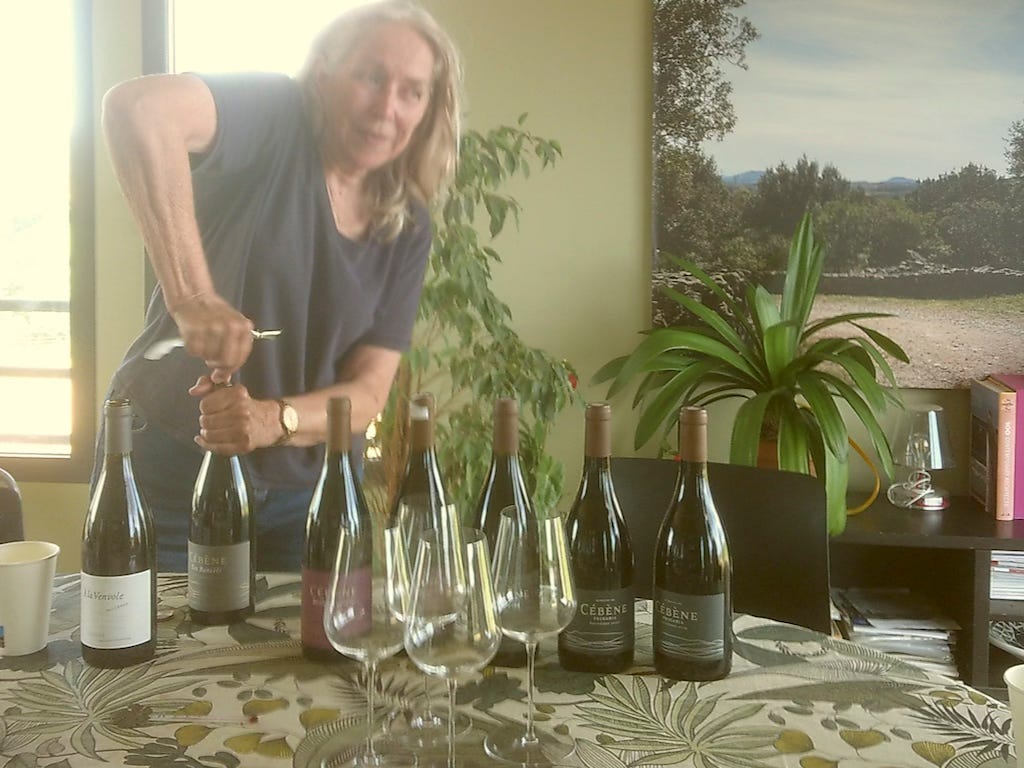
Darum gruppieren sich die anderen vier Weine: Den Auftakt macht Ex Arena. Ihr erster Wein. Eine Cuvée aus Grenache, Carignan und Syrah, auf Sandböden angebaut, vom Sand geprägt. Ich liebe Grenache auf Sandböden. Der Wein strahlt eine ungemeine Freude aus, berührt mich sofort, und ist gleichzeitig leicht, delikat und voller Leben. Spannend an diesem Wein finde ich, wie deutlich die Jahrgänge widergespiegelt werden: mal kühler, frischer, von der Säure geprägt und dadurch straffer, mal wärmer, etwas fruchtiger und kräftiger auftretend. Mit etwas Flaschenreife verändert sich der Wein erneut und zeigt wieder ein anderes Gesicht. Am beeindruckendsten war sicherlich die von Pierre, Brigittes Partner, frech zum Aperitif inszenierte Blindprobe eines Jahrgangs 2009, der mich buchstäblich umgehauen hat. Der Einstieg – und so ein Wein? Bitte mehr davon in meinen Keller.
Es folgt À la Venvole. Jetzt auf Schiefer. Wieder eine Cuvée aus Grenache, Carignan und Syrah – ein erster, offener Eindruck des Faugères-Terroirs. Brigitte liebt J.J. Cale, und ich ebenso, und der Song „Call Me the Breeze” beschreibt diesen Wein perfekt. Ziemlich modern und jung im Stil kommt er daher. Leicht gekühlt geht da schnell eine Flasche oder zwei weg. Doch der erste Eindruck kann auch hier täuschen: Der Wein bleibt lang, besitzt genauso Tiefe wie sein Vorgänger und drückt seine karge Herkunft sehr deutlich aus.
Dann: Belle Lurette. Old Vine Carignan. Saftig. „Crafted with irresistible sappidity – the most connection with my wish of transmission”, beschreibt Brigitte diesen Wein. Belle Lurette verbindet das klassische Faugères mit der Moderne. Ein Brückenwein, stark vertreten in der Gastronomie.
Den Abschluss bringt Felgaria. Fast ausschliesslich Mourvèdre. Tief, einlullend und meditativ. „Schist enables the tannin of Mourvèdre to soften, to deepen”, schwärmt Brigitte. Ich liebe auch Mourvèdre: wie er sich aus der Tiefe schält, wie samtig er einen umhüllt, undurchsichtig im Glas, ungestüm in seiner Jugend und bahnbrechend verführerisch nach einigen Jahren Flaschenreife. „Dicke, wabernde Luft um einen. Like being in the dark night, lost”, rundet Brigitte mein Schwärmen ab.
Die Gewissheit, etwas Nachhaltiges geschaffen zu haben
Was die Appellation ausserdem herausragend macht, sind ihre Weissweine – derzeit lediglich mit vier Prozent vertreten, Trend steigend. Auch Brigitte geht dem nach und hat vor einigen Jahren einen kompletten Weinberg auf Weiss umgestellt. Ab 2026 erscheint ein Blanc de Noir aus Grenache – vermutlich unter dem Namen À la Venvole Blanc. Ich bin gespannt.
„Seit 2019 nutze ich kein Holz mehr. Holz lässt den Wein atmen – aber es spricht mit. Ich möchte, dass nur der Schiefer spricht.” Brigitte arbeitet stattdessen mit Grès-Eiern aus Limoges und Terrakotta-Jars aus Italien. Amphoren haben nur minimalen Luftaustausch. „Wenn ich mehr brauche, belüfte ich manuell.”
„Wenn ich abends ins Bett gehe, will ich das Gefühl haben, der Erde geholfen zu haben, sich zu regenerieren.” Zehn Hektar besitzt sie. Zehn Hektar, die Mineralität und Vegetation aufbauen dürfen. „Darauf bin ich sehr stolz. Ich versuche so oft wie möglich darüber zu reden, Bewusstsein zu schaffen – dass man verantwortlich ist für sein Umfeld und dass man etwas tun kann, damit es gut wird. Sag mir, welches Produkt ausser Gemüse ist noch 100 % lokal? Meine Weine sind es. Alles, was ich brauche, ist hier um mich herum, und das freut mich. Mich für diesen Schritt entschieden zu haben, bereichert mein Leben – Wurzeln und Sinn zu haben. Und vielleicht inspiriere ich Menschen, die hierherkommen oder meine Weine schätzen, etwas davon in ihrem eigenen Umfeld umzusetzen.”
Diese Weine sind so fein, so elegant und wandelbar in ihrer Reife. Sie sind so schön – und ich behaupte, dass das Faugères, gerade mit seiner einzigartigen Geologie, dem Wind und den visionären Händen eines Menschen mit solcher Leidenschaft, derzeit die feinsten Weine des Languedoc hervorbringt. So. Und das ist meine erneute Liebeserklärung an diese Region, ihre Weine und ihre ErzeugerInnen.
—
Domaine de Cébène
Route de Caussiniojouls, D154, 34600 Faugères
Buy her wines here